




In the previous post, we discussed the different layers of Ethereum and smart contracts. Now let's explore the financial applications built on this foundation.
Financial Apps
In the previous post, we discussed the different layers of Ethereum and smart contracts. Now let's explore the financial applications built on this foundation.
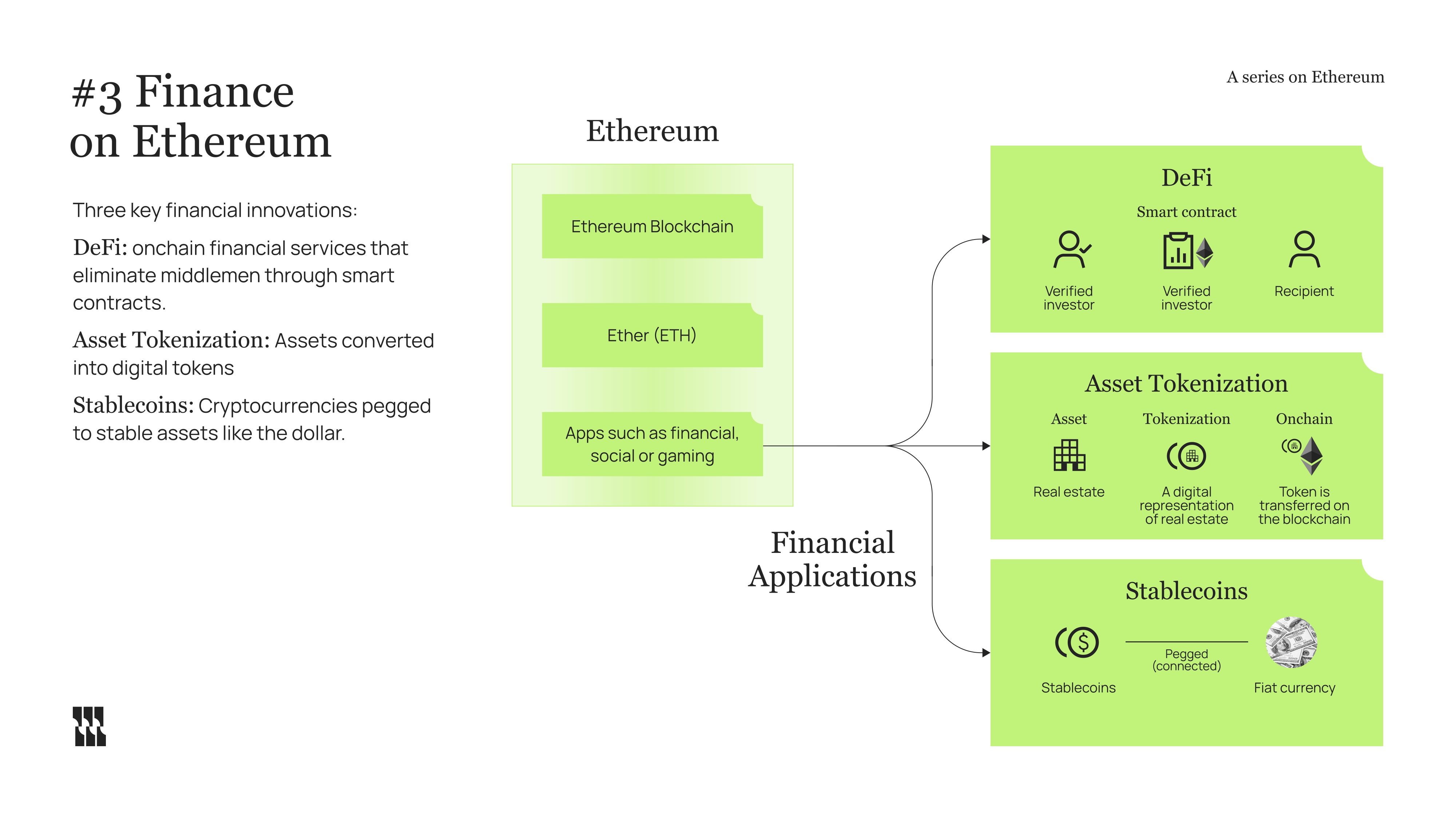
DeFi (Decentralized Finance)
A whole new financial category emerged from Ethereum's capabilities. DeFi is the onchain (= on the blockchain) financial system that uses cryptocurrencies (like ETH), smart contracts, and applications to enable services such as lending, trading, and investing.
Since operations are automated through smart contracts, middlemen are reduced or eliminated, making DeFi operations more cost-effective and faster than traditional finance.
Asset Tokenization
This is the process where real-world assets are represented on the blockchain by digital tokens. These tokens can be stored, transferred, or divided into fractional shares securely.
This enables 24/7 trading (no market hours), instant settlement, and increased liquidity for traditionally illiquid assets like real estate or fine art.
Stablecoins
Stablecoins are cryptocurrencies designed to maintain stable value (unlike ETH) by pegging (= connecting) them to assets like the US dollar, euro, or gold. Examples include USDC and USDT on Ethereum.
Think of them as digital cash equivalents enabling faster, 24/7 transactions and payments.For users like you and me, this opens up interesting new financial functionalities, such as:
- Sending money globally at the speed of sending a whatsapp message through DeFi
- Diversitying your portfolio by owning a fraction of real estate or art throught tokenization
- Paying for that using digital dollars, through stablecoins
The real impact will come when large financial institutions adopt this technology. More on that will follow later in this series

