




Ethereum's cryptocurrency (ETH) is only the tip of the iceberg. In this article we will dive into the 3 layers: infrastructure, currency and applications.
Introduction
Ethereum's cryptocurrency (ETH) is only the tip of the iceberg. In this article we will dive into the 3 layers: infrastructure, currency and applications.
In the previous article we discussed that the world of blockchain doesn't only consist of currencies, but also technology and ecosystems. Ethereum is the perfect example of this.
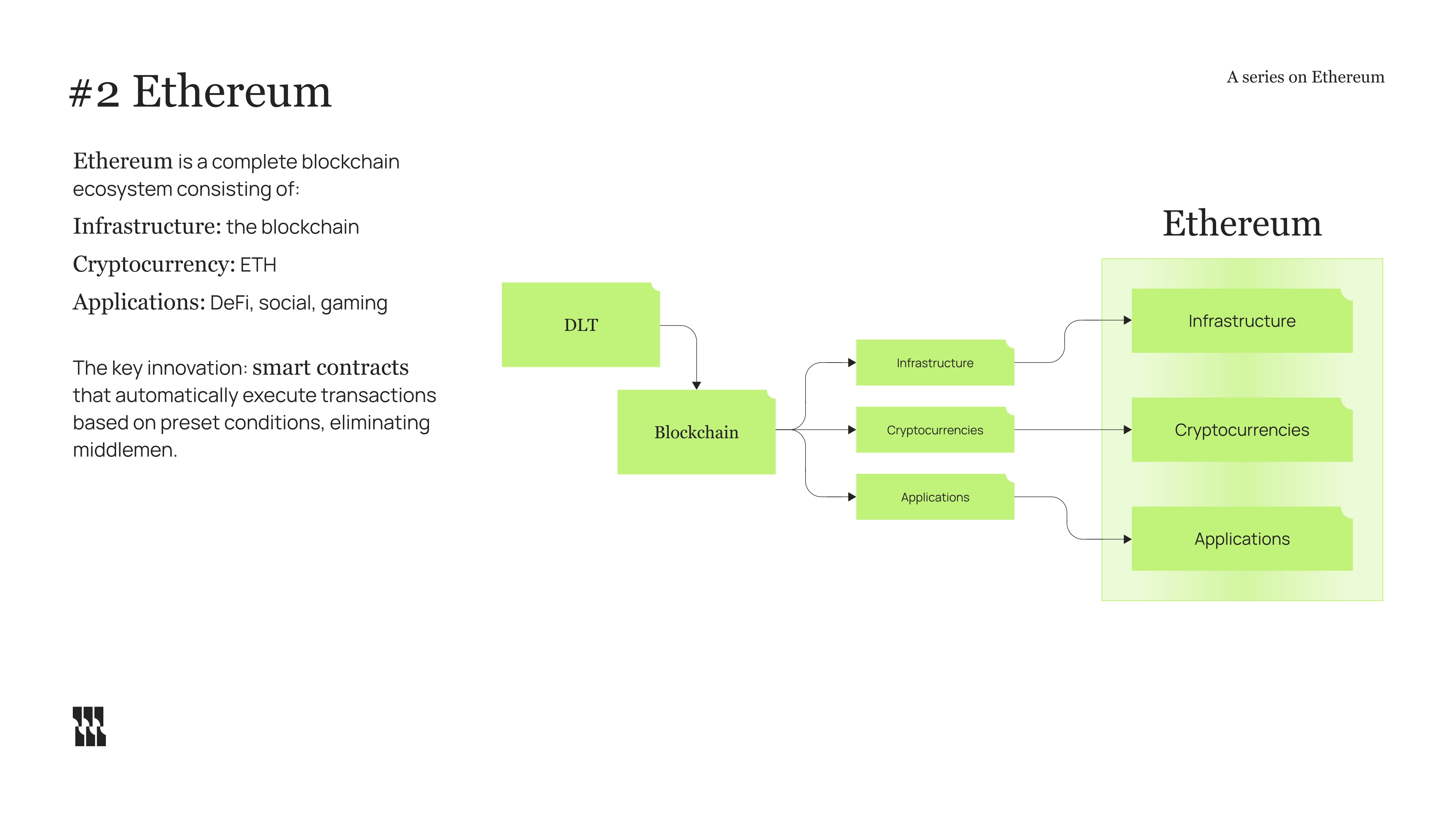
What is Ethereum?
Ethereum is a decentralized blockchain platform that acts like a global computer, powering smart contracts and apps without central control.
Moving back to the graphic we used last time: Blockchain can be divided into infrastructure, cryptocurrencies, and applications. In Ethereum's case, that division looks as follows:
→ Infrastructure = the Ethereum blockchain
→ Cryptocurrency = Ether (ETH)
→ Applications = all apps running on Ethereum
Let's break down each layer:
Infrastructure: The Ethereum Blockchain
Connected blocks of data storing transaction records. This is the chain where all Ethereum transactions are permanently stored. It's immutable (can't be changed) and transparent (anyone can view it).
Ethereum is a public blockchain, meaning it's accessible to anyone. This openness is why some banks and financial institutions are evaluating whether Ethereum or a private blockchain alternative best suits their operational needs.
Cryptocurrency: Ether (ETH)
Ether (ticker: ETH) is the native currency that runs on the Ethereum blockchain. You can transfer it just like Bitcoin, and its value fluctuates based on market dynamics.
ETH also serves another critical function: paying for "gas fees," which are the small transaction costs charged when operations occur on the network. These fees vary based on network demand.
Applications: Where Innovation Happens
This is where Ethereum becomes extremely interesting. It supports an incredible variety of use cases, including:
→ Financial services (DeFi, lending, trading)
→ Social platforms (decentralized networks)
→ Gaming (play to earn worlds)
The Game Changer: Smart Contracts
One of Ethereum's most powerful features is smart contracts, which are self executing code that follows "if then" logic. Think of it like this: If I press the button on my coffee machine, it gives me an espresso. If I don't press it, no espresso. In finance: If investor A completes KYC requirements, the transaction executes automatically. If not, no transaction occurs.
This self executing code enables the automation of countless processes that traditionally require manual verification.
In the next post we will dive further into the financial applications that are running on ethereum.

